

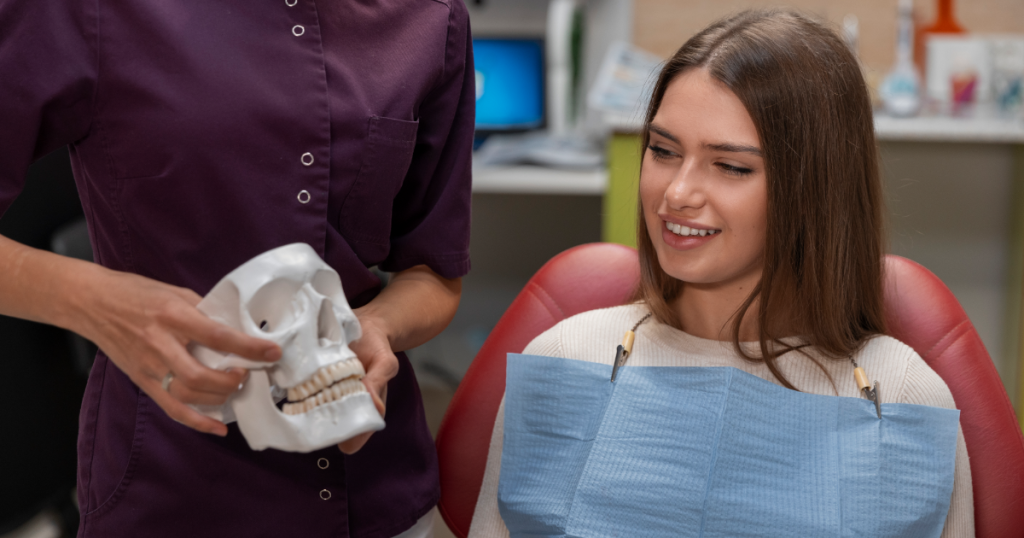
Losing one or more teeth can be resolved in several ways today, but patients often find it difficult to assess which solution is truly the best for them. The most common choices come down to bridges, dentures, and implants. Although these options are frequently compared, in practice, there is no one-size-fits-all solution. The right choice depends on the number of missing teeth, the condition of the surrounding teeth and bone, functional needs, aesthetic expectations, and the overall treatment plan.
Bridges and dentures: proven solutions with clear indications
A dental bridge is a fixed prosthetic restoration that replaces one or more missing teeth by relying on adjacent teeth for support. It is usually a good choice when stable abutments are present and when an efficient, functional, and aesthetically acceptable solution is needed. Its advantage is that it provides the patient with a sense of stability and relatively quickly restores chewing function and the appearance of the smile.
Dentures are removable replacements used when a larger number of teeth are missing or when the clinical situation does not favor fixed restorations. They still hold an important place in dentistry, especially in cases of extensive tooth loss or when a more affordable therapeutic solution is required. Modern dentures are now planned much more precisely than before, with the goal of being as stable, functional, and comfortable as possible for the patient.
Implants: a modern solution for long-term stability
Dental implants represent a replacement for the tooth root and serve as a support for crowns, bridges, or other prosthetic restorations. Their great advantage is that they do not require the grinding of adjacent teeth and they contribute to preserving the bone in the region of the missing tooth. For this very reason, implantology holds an increasingly important place in modern dentistry.
Implants are often an excellent choice when a single tooth is missing, when high stability is desired, or when a patient seeks a long-term functional and high-quality aesthetic solution. However, they are not always the first choice. Their placement requires thorough diagnostics, an adequate amount of bone and surrounding tissue, as well as proper planning and time for the entire therapeutic process.
What is the best choice, then?
The most important thing to understand is that one does not choose the "most modern" option, but rather the one that is best for the patient. Sometimes, a bridge will be a completely justified and high-quality solution. In other situations, a denture will be the most rational choice. When clinical conditions allow, implants often offer a high level of stability, functionality, and long-term predictability.
A modern dental approach implies individualized treatment planning. This means that it is not just the missing teeth that are observed, but the entire picture: the bite, the condition of the gums, bone quality, load distribution, hygiene habits, and the patient's expectations.
The right choice begins with good diagnostics
At the Bandić Polyclinic, every plan for replacing missing teeth is based on detailed diagnostics and professional assessment. The goal is not to offer the same solution to every patient, but to select the therapy that will provide the best functional and aesthetic results in the long term.
Bridges, dentures, and implants each have their place in modern dentistry. The difference lies in when they are applied and for whom they are most suitable. Therefore, the best choice is always the one that is professionally planned, individually tailored, and focused on health, stability, and a natural-looking smile.


 English
  Bosnian