

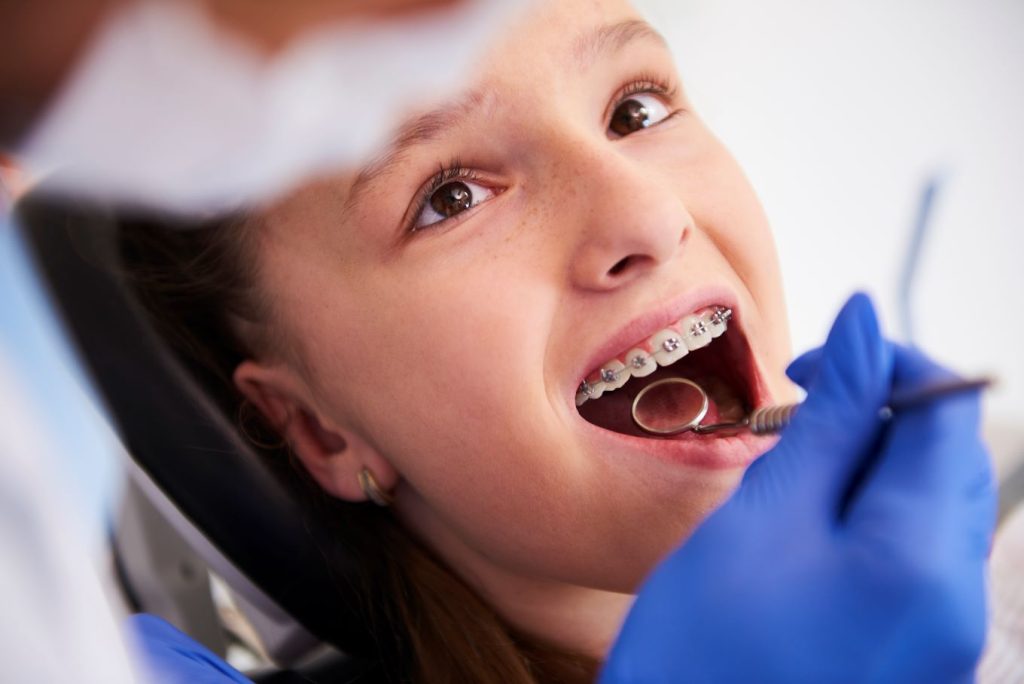
Parents often assume that the first orthodontic check-up is planned only after all permanent teeth have grown in. In practice, this is often too late for some problems that can be identified much earlier. The American Association of Orthodontists recommends a first orthodontic visit between ages 5 and 7, as the mouth at that stage typically contains a combination of baby and permanent teeth, allowing for timely assessment of jaw development, bite, and spacing for incoming teeth.
An early check-up does not automatically mean the start of treatment. Its greatest value lies in the orthodontist's ability to recognize early signs of abnormal development and determine whether a child needs monitoring or interceptive therapy — treatment that works while the child is still growing. This is where myofunctional appliances play an important role, particularly in children showing functional disorders related to breathing, tongue position, and lip and cheek muscle activity.
When should parents pay attention?
The first signs that an orthodontic check-up is needed often appear long before a child develops a "crooked" smile. The most important signals include mouth breathing, prolonged thumb or pacifier sucking, incorrect tongue position, tongue thrusting during swallowing, pronounced forward protrusion of the upper teeth, reverse bite, open bite, asymmetric jaw closure, and insufficient space for permanent teeth to erupt. Prolonged oral habits are associated with changes such as open bite and posterior crossbite, while the AAO also lists functional jaw shift, crowding, spacing, lack of proper tooth contact, and habits affecting jaw growth as reasons for early evaluation.
Special attention should be paid to children who constantly keep their lips apart, habitually breathe through their mouth, have difficulty closing their lips at rest, or have speech and swallowing patterns involving visible tongue activity between the teeth. These patterns can affect jaw development and tooth position, meaning that treatment in such cases addresses not only tooth alignment but also functional correction.
What is a myofunctional appliance?
A myofunctional appliance is an orthodontic device used during a child's growth phase with the aim of guiding the function of the lip, tongue, and cheek muscles, as well as jaw and bite development. This type of therapy is most commonly used in children with functional irregularities, mild to moderate orthodontic problems, and developmental patterns that can still be directed during growth. Contemporary research describes myofunctional and related functional appliances as part of an early orthodontic approach in children, particularly in the treatment of certain forms of malocclusion and oral functional disorders.
Its importance lies in the fact that it addresses the cause rather than just the consequence. If a child breathes through their mouth, holds the tongue incorrectly, or swallows with an abnormal pattern, the teeth and jaws are often subjected to constant forces that gradually affect the bite. In such cases, conventional orthodontics can later straighten the teeth, but without functional correction there is a greater risk of the problem recurring or the result being less stable than it could be. Orofacial myofunctional therapy and functional appliances are specifically aimed at improving breathing, swallowing, and oral muscle function patterns.
For which children might a myofunctional appliance be a good choice?
A myofunctional appliance may be beneficial for children with protrusion of the front teeth, mild bite irregularities, poor oral habits, improper tongue position, mouth breathing, or a need for early guidance of jaw growth. Review studies indicate that prefabricated myofunctional appliances can help reduce increased horizontal overjet, deep bite, and mandibular crowding compared to no treatment, although the quality of evidence is not always high and results depend on proper indication and the child's cooperation.
This means the appliance is not a universal solution for every child, but in carefully selected cases it can play an important role in an early orthodontic plan. The best results are achieved when therapy is introduced at the right time, when the child wears the appliance consistently, and when progress is monitored through follow-up appointments.
Why is early assessment important?
In pediatric orthodontics, timing is of great value. During the growth phase it is possible to guide jaw development and identify problems before they become more pronounced. The AAO notes that early evaluations can help guide jaw growth, create space for permanent teeth, and reduce the complexity of later treatment, while the AAPD's guidelines emphasize the importance of monitoring dentition and occlusion development throughout childhood.
In children with crossbite or functional jaw shift, early intervention has additional value, as untreated crossbite can be associated with asymmetric jaw growth and enamel wear. A timely orthodontic check-up therefore often means simpler and biologically more favorable treatment.
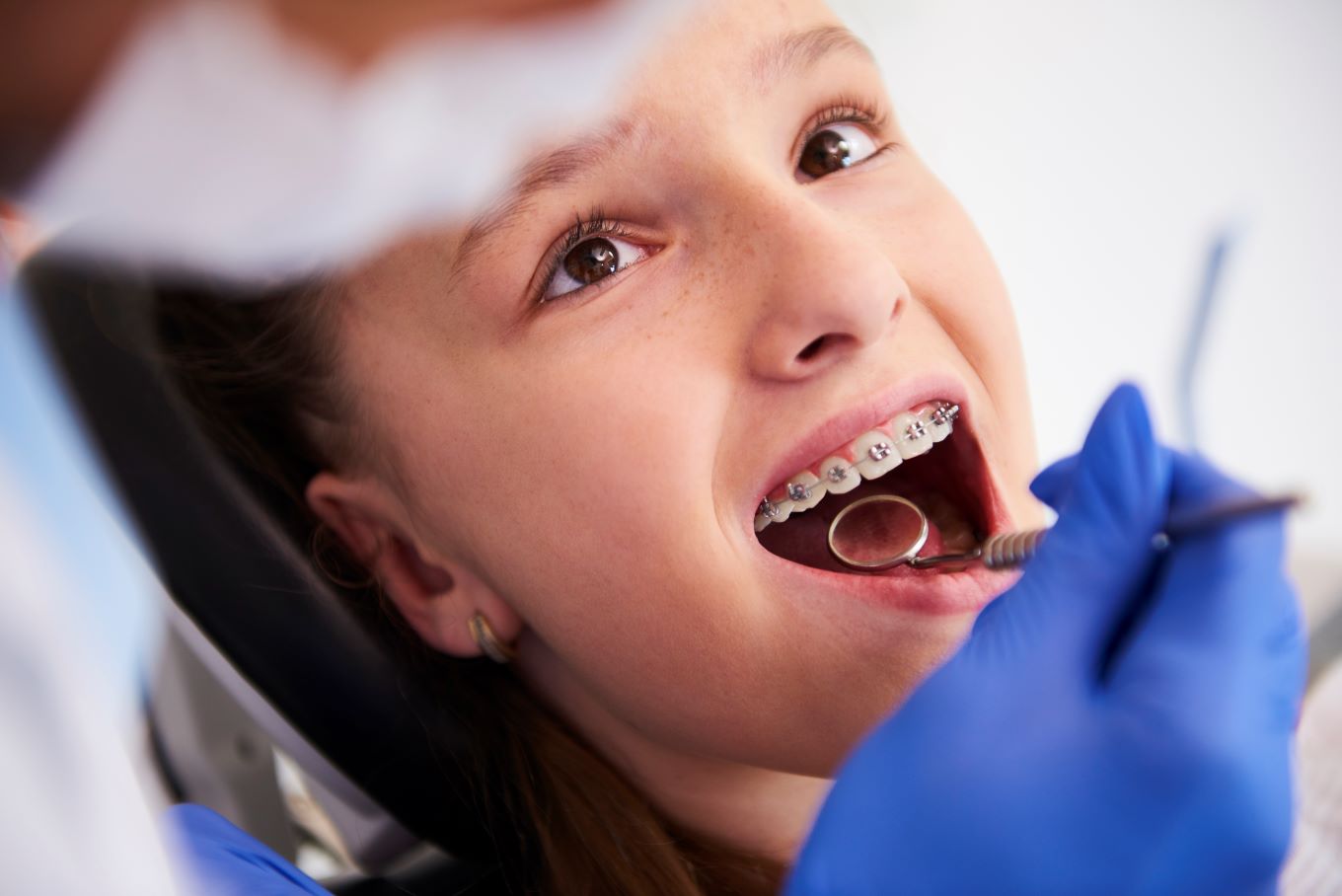
At Poliklinika Bandić, the first pediatric orthodontic examination should be viewed as a professional developmental assessment, not merely a check for "crooked teeth." During the examination, the jaw relationship, lip closure, tongue position, space for permanent teeth, the presence of harmful habits, and the overall function of the orofacial system are all analyzed. When there is an indication for early treatment, a myofunctional appliance may be part of the treatment plan for children who need growth guidance and correction of functional patterns.
 English
  Bosnian