

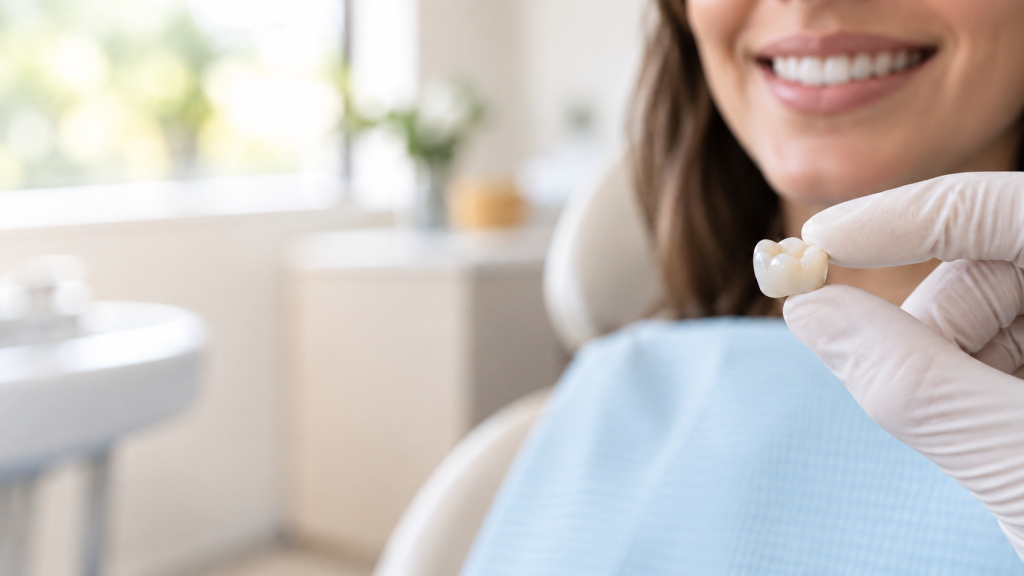
Zirconia crowns have gained an important place in modern prosthodontics in recent years because they allow damaged teeth to be restored without a metal base. Their value lies in more than just a beautiful and natural appearance. A well-planned crown should protect a weakened tooth, enable a proper bite and provide stable function during chewing.
When discussing premium zirconia crowns, patients often first think of a more beautiful and whiter smile. Aesthetics are important, but the quality of the final result also depends on the choice of material, the precision of tooth preparation, laboratory fabrication and correct crown placement.
What is a zirconia crown?
A dental crown, often referred to by patients as a cap, covers the visible part of a tooth. It is used when a tooth is weakened, damaged or aesthetically altered to such an extent that it can no longer be reliably restored with a filling.
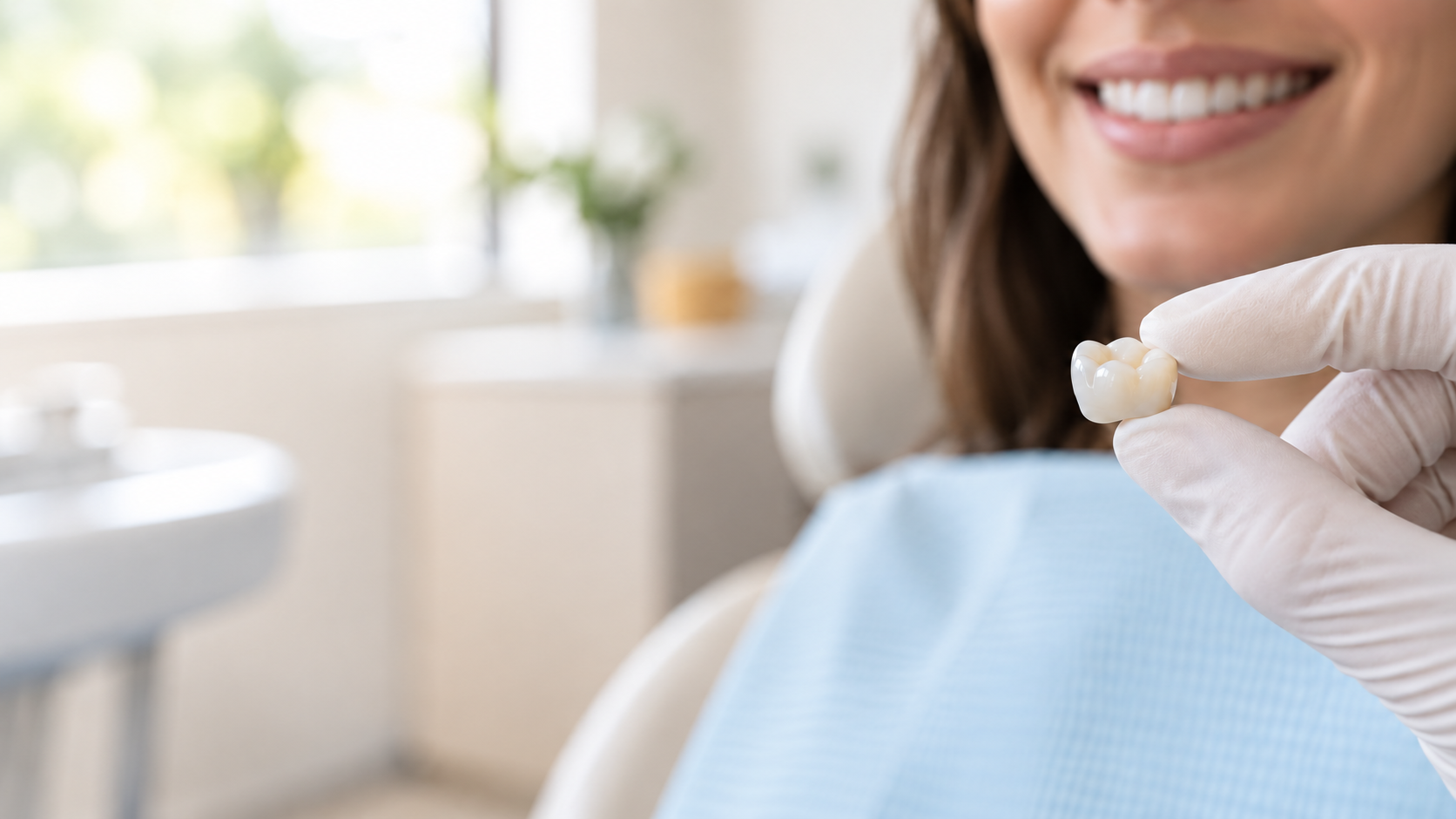
A zirconia crown is made from dental ceramic based on zirconium dioxide. Unlike metal-ceramic crowns, it does not have a dark metal base. The material is white, strong and suitable for CAD CAM processing, in which the crown is digitally designed and precisely fabricated from a ceramic block.
There are several types of zirconia. Some are primarily focused on high strength, while others have greater translucency and allow for a more natural appearance. The choice depends on the tooth’s position, the bite, tooth colour and the patient’s aesthetic expectations.
What does “premium” mean?
The term “premium” is not a standardised professional category that always denotes the same material or procedure. In dental practice, it most often refers to more advanced zirconia materials and more detailed customisation of the crown’s shape, shade, translucency and surface texture.
At Dr. Bandić Polyclinic, the service is listed in the official price list as a premium zirconia ceramic CAD CAM crown. For the patient, however, what matters more is which material has been selected for their tooth, why it is suitable and how the crown will blend with the rest of their smile.
When are zirconia crowns recommended?
A zirconia crown may be a good choice when:
- a tooth has a large filling and little remaining healthy tissue
- there is a crack or significant tooth wear
- a tooth needs additional protection after root canal treatment
- there are pronounced changes in colour or shape
- an existing crown no longer meets functional or aesthetic criteria.
They are particularly appealing to patients who want a metal-free solution. The absence of a metal base can allow for a more natural appearance, especially along the gumline.
However, a crown is not automatically the best solution for every aesthetic problem. When a tooth is healthy and well preserved, composite correction, a ceramic veneer, orthodontic treatment or another type of restoration can sometimes preserve more natural tooth tissue.
What are the advantages of zirconia?
One of the main advantages of zirconia crowns is the combination of strength and a natural appearance. Zirconia is resistant to loading, which means it can also be used for back teeth, while modern types with greater translucency allow for the aesthetic result that is important for front teeth.
Since there is no metal base, there is no grey show-through of the kind that can sometimes be seen in older dental restorations.
CAD CAM technology enables digital planning and precise crown fabrication according to the shape of the tooth and the patient’s bite. However, accurate scanning or impression-taking, shade selection and the expertise of the dentist and dental technician are equally important for a high-quality result.
Are they suitable for both front and back teeth?
Yes, but the requirements are not the same.
For front teeth, natural colour, translucency and the way the crown looks in the light are particularly important. For back teeth, greater emphasis is placed on strength because they are exposed to greater pressure during chewing.
Additional attention is needed if the tooth beneath the crown is very dark, has a metal post and core, or if the patient clenches or grinds their teeth. In these situations, the material and treatment are adapted individually.
What does the fabrication process involve?
The process begins with an examination of the teeth, gums and bite, and an X-ray is taken if necessary. Tooth decay, gum inflammation or other problems should be treated before the permanent crown is fabricated.
The tooth is then shaped to create space for the crown. After a digital scan or a conventional impression, a temporary crown is made while the permanent crown is fabricated in the laboratory.
Before permanent placement, the shape, colour, fit against the tooth, contact with neighbouring teeth and bite are checked. After the final checks, the crown is secured and the bite is checked again.
A short adjustment period to the new tooth shape is normal, but the crown should not cause persistent pain or a feeling that the tooth is too high.
How long can a zirconia crown last?
A zirconia crown can last for many years, but its longevity depends on several factors: the condition of the natural tooth, the quality of fabrication and placement, the bite, oral hygiene and regular check-ups.
The crown itself cannot develop decay, but decay can occur in the natural tooth along its edge. This is why regular toothbrushing, cleaning between the teeth and dental check-ups remain very important.
Biting ice, very hard foods and opening packaging with the teeth should be avoided. A protective night guard may be recommended for people who clench or grind their teeth.
It is also important to know that whitening does not change the colour of a zirconia crown. If a patient is planning whitening and a crown on a visible tooth, it is recommended that whitening be carried out first, and only then should the appropriate crown shade be selected.
When should another solution be considered?
If there is gum inflammation, untreated tooth decay or an infection, the existing problem must be treated first. For minor damage, a simpler procedure that preserves more natural tooth tissue may be recommended.
The choice between zirconia, other ceramic and metal-ceramic crowns depends on the position and condition of the tooth, the load during chewing and the desired appearance. This is why the appropriate material is selected after an examination, rather than solely according to its name or price.
Premium zirconia crowns at a promotional price
Dr. Bandić Polyclinic currently offers premium zirconia crowns at a promotional price of 400 KM, instead of the regular price of 600 KM. The offer is valid until the end of September.
Before a crown is fabricated, an examination and individual assessment are carried out to determine whether this type of crown is an appropriate solution and whether additional procedures are needed before the prosthetic phase.
A premium zirconia crown can provide an excellent combination of a natural appearance, strength and precise fabrication when there is an appropriate indication for it. The aim is not simply to achieve the whitest possible tooth, but a crown whose shape, colour and function suit the tooth, gums, bite and the rest of the smile.
For more information about the promotional offer and to book an appointment, contact Dr. Bandić Polyclinic by the end of September.

 English
  Bosnian